The Evolution of Agentic AI: From Cybersecurity to Table Tennis
In April 2026, Agentic AI is expanding beyond the digital realm and into the physical world and the frontlines of cybersecurity. We explore the latest trends through Sony AI's table tennis robot 'Project Ace' and Anthropic's 'Project Glasswing'.
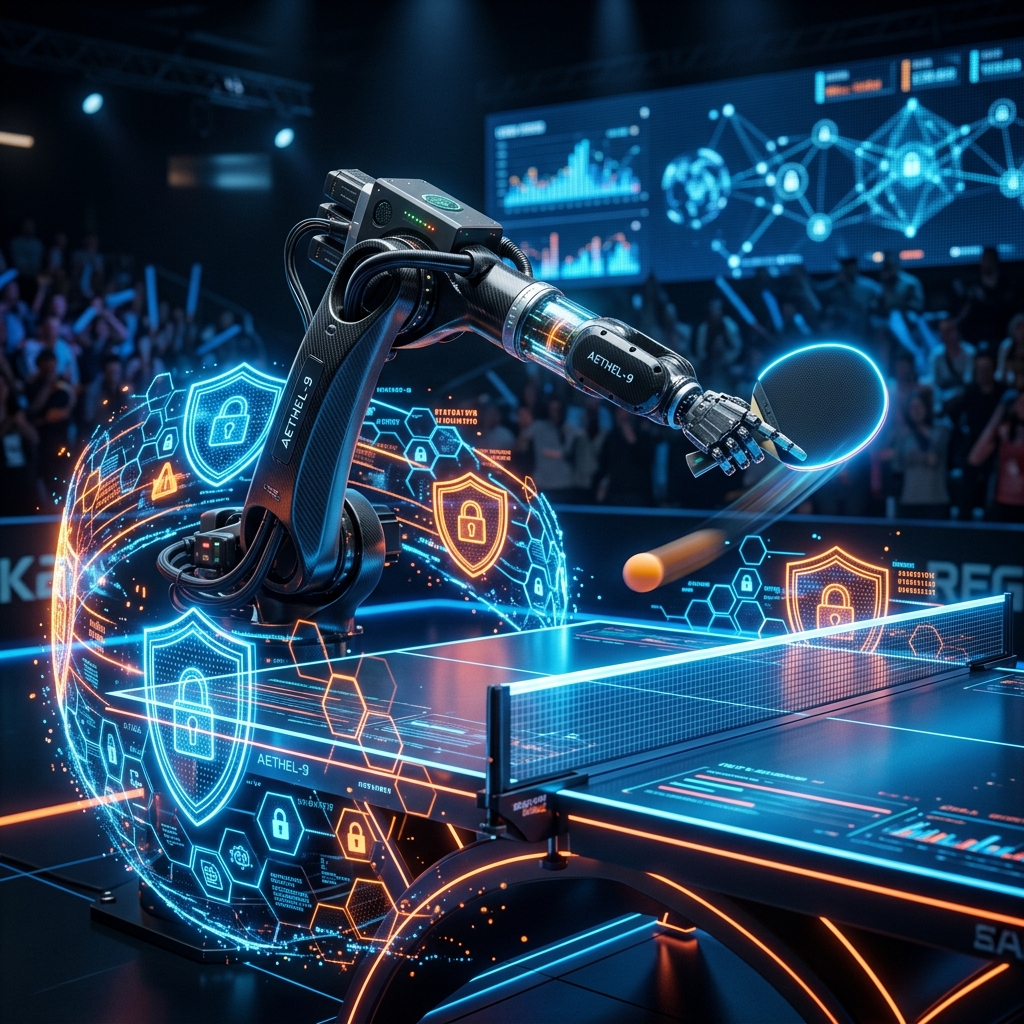
The recent trajectory of AI development is rapidly shifting away from simply generating text or images toward Agentic AI—systems capable of understanding goals and executing multi-step workflows autonomously.
As of April 2026, these Agentic AI systems are expanding their reach beyond digital spaces into the physical world and global cybersecurity sectors. In this article, we examine the current state of Agentic AI through major announcements made this week.
1. Physical AI: Sony AI's 'Project Ace'
One of the most notable achievements is Sony AI's announcement of 'Project Ace'.
- Achievement: They implemented an autonomous robotic system that demonstrates expert-level skills in table tennis, a highly competitive physical sport.
- Significance: This proves that AI can go beyond mere data processing to Perceive, Reason, and Act instantaneously in dynamic, high-speed physical environments. With perfect synchronization between robotics hardware and agentic software, this breakthrough is expected to have a profound impact on physical automation industries such as manufacturing and logistics.
2. Cybersecurity: Anthropic's 'Project Glasswing'
Agentic AI is also making waves in the cybersecurity sector, which is responsible for keeping the digital realm safe.
- Update: Anthropic launched 'Project Glasswing', a proactive defense system utilizing its Claude Mythos model. Built in collaboration with global tech giants including Amazon, Microsoft, Apple, Google, and Nvidia, this initiative has successfully identified thousands of critical software vulnerabilities.
- Significance: Moving away from traditional reactive security systems that respond only after an attack has occurred, Agentic AI now autonomously scans the entire system architecture and builds defense logics, ushering in the era of 'Proactive Security'.
3. A New Paradigm: Native Multimodality and Edge AI
Two important trends provide the technical foundation that makes these agentic operations possible.
- Native Multimodality: Models are now designed from the ground up to process text, audio, images, and video simultaneously. This allows them to understand complex situations without the need for separate conversions or modules.
- The Rise of Edge AI: With advancements in dedicated NPUs and AI accelerators in mobile chipsets, heavy computations can be processed immediately on the device itself (Inference) rather than being sent to the cloud, ensuring extreme low-latency and enhanced security.
Henry's Takeaway: "From Digital Assistants to Proactive Colleagues"
AI has evolved from a 'tool' that waits to be told what to do, into a 'colleague' that autonomously identifies problems and executes solutions. From controlling robots on manufacturing floors to building invisible defense networks on cloud servers, the era of Agentic AI will hit its stride starting in 2026. What kind of autonomous agents are you planning to introduce into your systems?

Henry — Robot Education Founder
Engineer dedicated to democratizing robot education for everyone. From hardware bring-up to AI integration, I document real learning.
Comments
Loading comments...